
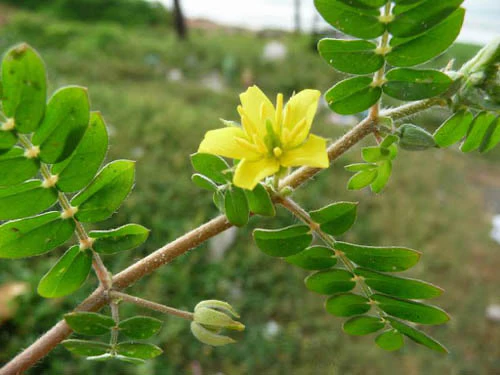
Botanical Profile
- Botanical Name: Tribulus terrestris Linn.
- Family: Zygophyllaceae
- English Name: Small Caltrops / Puncture Vine
- Sanskrit Name: Gokshura
1️⃣ Introduction
Gokshura is one of the most important Mutrala (diuretic) and Vrishya (aphrodisiac) herbs described in Ayurveda. It is widely used in disorders of:
- Mutravaha Srotas (urinary system)
- Shukravaha Srotas (reproductive system)
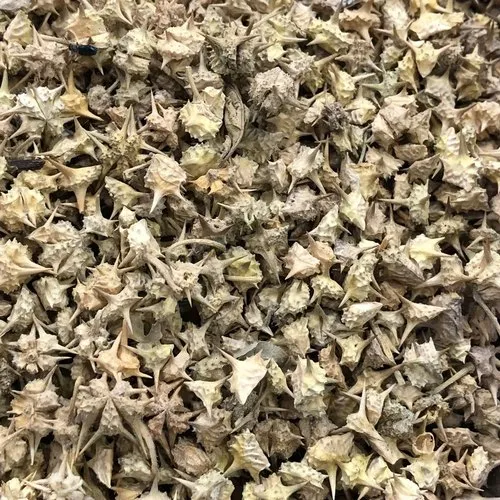
The name “Gokshura” refers to the shape of its fruit resembling a cow’s hoof. It is a key drug in Laghu Panchamoola and numerous classical formulations.
It grows in dry, sandy, xerophytic regions throughout India.
2️⃣ Vernacular Names
- English – Small Caltrops
- Hindi – Gokharu
- Tamil – Nerunjil
- Telugu – Palleru
- Kannada – Negalu
- Malayalam – Nerinnil
3️⃣ Synonyms (Sanskrit)
गोक्षुरो लघुगोक्षुरो शष्ट्रस्त्रिकंटकः ।
श्वदंष्ट्रो वृषमूत्रघ्नो बल्यो बलविवर्धनः ॥
Important synonyms:
- Gokshuraka
- Trikantaka
- Shvadamshtra
- Kshudra Gokshura
4️⃣ Classification in Brihattrayi
According to Charaka Samhita
- Sothahara
- Mutravirechaniya
- Krimighna
According to Sushruta Samhita
- Vidarigandhadi Gana
- Viratarvadi Gana
- Laghu Panchamoola
According to Ashtanga Hridaya
- Vidarigandhadi Gana
गोकण्टः कण्टफलो भक्षरः स्वादुकण्टकः । श्वदंष्ट्रको व्यालदंष्ट्रो गोक्षुरु गोक्षुरः क्षुरः ॥६८॥
Kaidev Nighantu- Aushadhi Vargha – Shloka no. 68
गोक्षुरो मधुरो वृष्यो दीपनो बलपुष्टिकृत् ॥६६॥
शीतलो वस्तिवातघ्नो दोषत्रयनिबर्हणः हृद्रोगमेहकृच्छाश्म श्वासकासरुजाहरः ॥७०॥
Kaidev Nighantu- Aushadhi Vargha – Shloka no. 66 & 70
गोक्षुरः पुरकोऽपि स्यात्त्रिकण्टः स्वादुकण्टकः । गोकण्टको गोजुरको वनश्शृङ्गाट इत्यपि ॥४४॥
पलङ्कषा श्वदंष्ट्रा च तथा स्यादिनुगन्धिका । गोचुरः शीतलः स्वादुर्वलक्रुद्वस्तिशोधनः॥४५॥
मधुरो दीपनो वृष्यः पुष्टिदश्चाश्मरीहरः । प्रमेहश्वासकासार्शः कृच्छ्रहृद्रोगवातनुत् ॥४६॥
Bhavprakash Nighantu – Guduchyadi Vargha – Page 262 – Shloka no. 44-46
5️⃣ Varieties & Controversy
- Tribulus terrestris (Laghu Gokshura)
- Pedalium murex (Gaja Gokshura)
Controversial/adulterant species:
- Xanthium strumarium
- Martynia diandra
- Acanthospermum hispidum
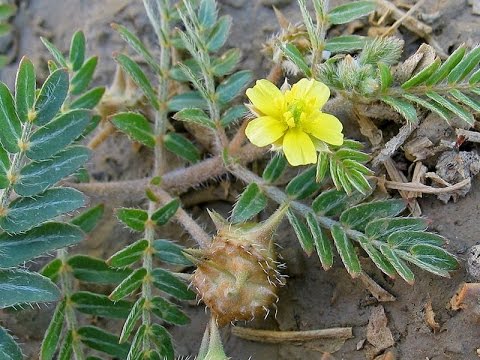
6️⃣ Morphology
- Prostrate spreading herb
- Opposite pinnate leaves (6–8 pairs leaflets)
- Yellow solitary flowers
- Hard spiny fruits (4–5 segments)
- Flowering: April–September
7️⃣ Distribution
- Found in dry regions across India
- Common in sandy soils
8️⃣ Chemical Constituents
- Steroidal saponins: Diosgenin, Gitogenin
- Flavonoids: Rutin, Quercetin
- Alkaloids: Harmane, Harmine
- Potassium salts
- Essential oils
9️⃣ Ayurvedic Pharmacology
| Rasa | Guna | Virya | Vipaka |
|---|---|---|---|
| Madhura | Guru, Snigdha | Sheeta | Madhura |
🔟 Karma (Actions)
- Mutrala
- Vrishya
- Rasayana
- Balya
- Ashmarihara
- Vata-Pitta Shamak
- Deepana
1️⃣1️⃣ Effect on Doshas
- Tridosha balancing
- Especially pacifies:
- Vata
- Pitta
⚠ Excess may increase Kapha.
1️⃣2️⃣ PARTS USED
- Whole plant
- Fruits (mainly)
- Roots
- Leaves
1️⃣3️⃣ DOSAGE
- Churna: 3–6 g
- Kwatha: 50–100 ml
- Leaf juice: 10–15 ml
1️⃣4️⃣ DETAILED INDICATIONS WITH HOW TO USE
🔹 1. Mutrakrichra (Dysuria)
Symptoms:
Burning urination, pain, scanty urine.
Action:
- Diuretic
- Cooling
- Reduces inflammation
How to Use:
- Decoction 50 ml twice daily
- Add honey
- Duration: 7–14 days
🔹 2. Ashmari (Kidney Stones)
Symptoms:
Severe flank pain, hematuria.
Action:
- Stone dissolving
- Smooth muscle relaxant
- Increases urinary flow
How to Use:
- Fruit powder 3–6 g with honey + goat milk
OR - Decoction twice daily
Duration: 4–6 weeks (under supervision)
🔹 3. Urinary Tract Infection
Action:
- Antibacterial
- Diuretic
How to Use:
- Kwatha twice daily
- Combine with Chandraprabha Vati in practice
🔹 4. Prameha (Diabetes)
Action:
- Hypoglycemic
- Rasayana
How to Use:
- 3 g powder twice daily
- Combine with Gudmar for better effect
🔹 5. Klaibya (Erectile Dysfunction)
Action:
- Vrishya
- Improves sperm count & motility
How to Use:
- 5 g powder with warm milk at bedtime
- Combine with Ashwagandha
🔹 6. Female Infertility & Vaginal Disorders
Action:
- Strengthens reproductive tissues
- Supports hormonal balance
How to Use:
- Powder with milk
- Decoction 50 ml twice daily
🔹 7. Hypertension with Edema
Action:
- Diuretic
- Cardiotonic
How to Use:
- Decoction daily
- Monitor BP regularly
🔹 8. Amavata (Rheumatoid Arthritis)
Action:
- Anti-inflammatory
- Vata-pacifying
How to Use:
- Decoction with Sunthi
- Twice daily
🔹 9. Lumbago (Katishoola)
- Decoction morning empty stomach
- 2–3 weeks
🔹 10. Hair Growth
How to Use:
- Paste of Gokshura + Tila flowers + honey + ghee
- Apply on scalp
1️⃣5️⃣ Important Classical Yogas
- Dashamoola Kashaya
- Gokshuradi Guggulu
- Brihatyadi Kashaya
1️⃣6️⃣ Modern Pharmacological Activities
- Anti-inflammatory
- Diuretic
- Antibacterial
- Hypotensive
- Hypoglycemic
- Aphrodisiac
Recent research:
- Improves sperm parameters
- Helps in renal stone expulsion
- Supports PCOS management
1️⃣7️⃣ Precautions
- Avoid excessive use
- Use cautiously in:
- Pregnancy
- Lactation
- Diabetes
- Hypertension
Always use under medical supervision.
🌟 CONCLUSION
Gokshura (Tribulus terrestris) is a cooling, strengthening, diuretic, stone-dissolving, and rejuvenating herb. It is one of the most important drugs for:
- Urinary disorders
- Kidney stones
- Reproductive weakness
- Edema
- Inflammatory conditions
It plays a major role in Mutravaha and Shukravaha Srotas management in Ayurveda.

Dr Abhijit gives nice information with all details, images . It is useful for all specially who doing BAMS ,they have to follow Dr Abhhijeet shirkande.
Thank you sir ,
Jay Dhanwantari-Jay Ayurveda 👍 👏
Thank you.