
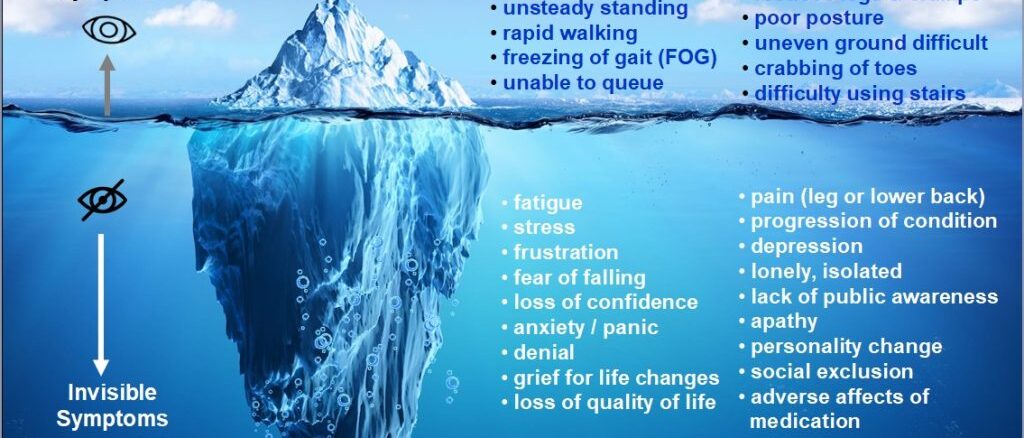
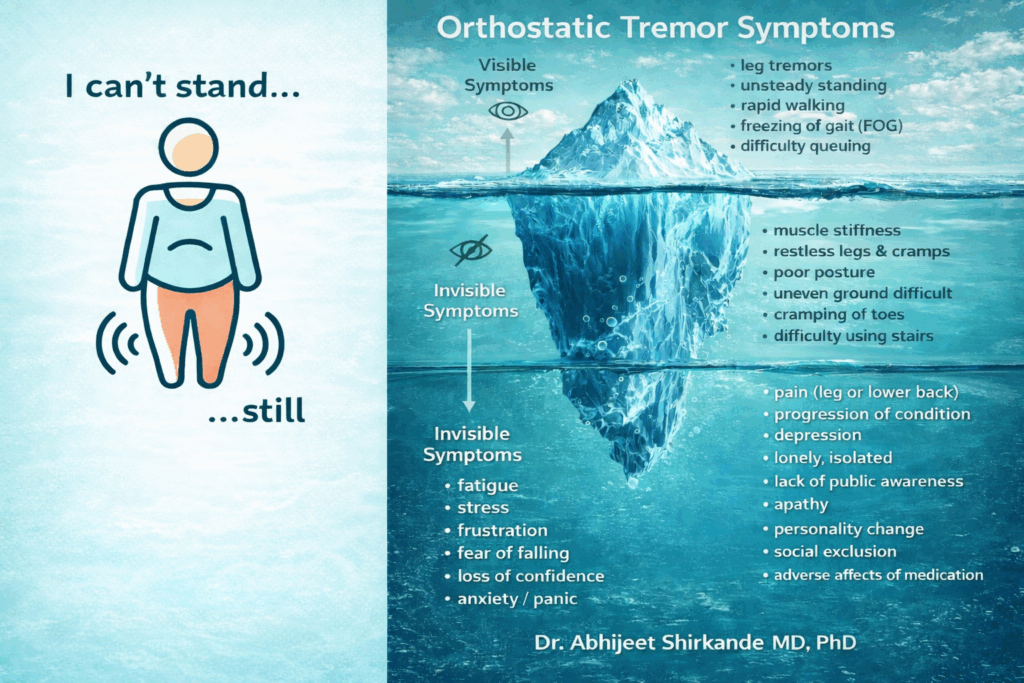
Primary Orthostatic Tremor (POT) is a rare, progressive neurological movement disorder characterized by a high-frequency (13–18 Hz) tremor occurring specifically while standing. Patients often describe it as “shaky legs syndrome” — a rapid internal trembling in the legs that causes severe unsteadiness and fear of falling.
Unlike other tremors, it disappears while walking, sitting, or leaning, making it a unique isometric tremor disorder.
🧠 Modern Medical Understanding
Primary Orthostatic Tremor is considered a central nervous system movement disorder. It most commonly develops around the age of 60 (range: 13–85 years) and progresses slowly over time.
🔎 Key Clinical Features
- Rapid, high-frequency trembling of legs and trunk
- Occurs shortly after standing
- Relieved by sitting or walking
- Feeling of imbalance or internal vibration
- May lead to anxiety or fear of falling
🧪 Diagnosis
Diagnosis is clinical and confirmed by:
- Surface Electromyography (SEMG)
Showing a characteristic 13–18 Hz “helicopter-like” rhythmic discharge in leg muscles.
Unlike essential tremor or Parkinsonian tremor, POT is primarily a lower extremity isometric tremor.
💊 Conventional Management
There is currently no definitive cure. First-line medications include:
- Clonazepam
- Gabapentin
Mobility aids may be required in advanced cases.
It is important not to confuse POT with Parkinson’s disease, although sometimes overlapping cases may occur (referred to as OT-plus).
🌿 Ayurvedic Perspective: Kampavata
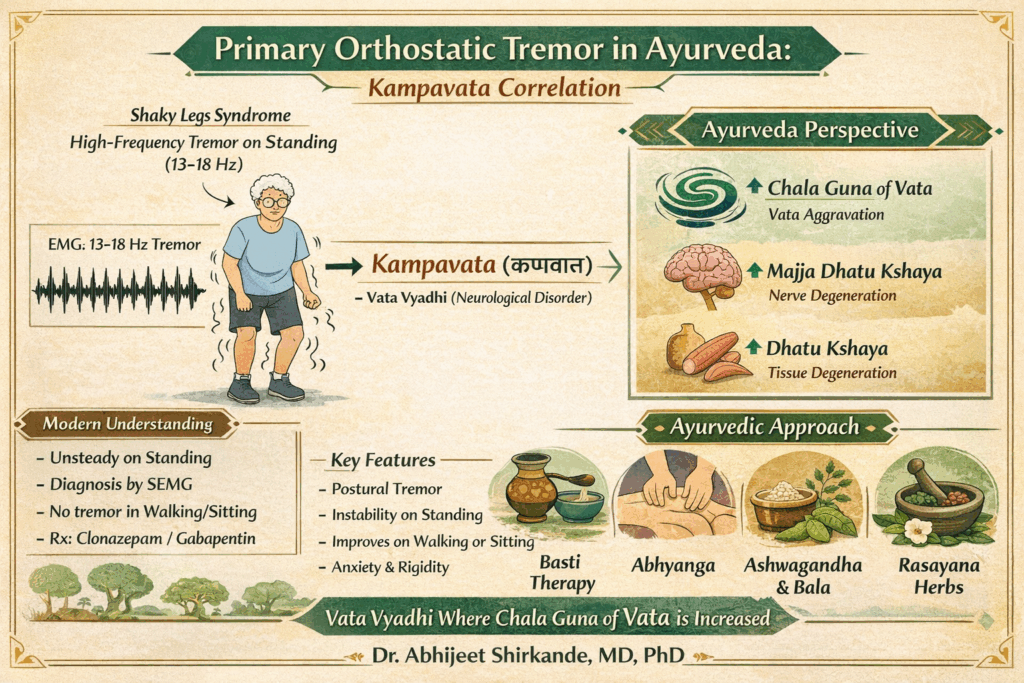
In Ayurveda, Primary Orthostatic Tremor can be understood under the category of Kampavata, a type of Vata Vyadhi (neurological disorder).
Conceptual Correlation
- Kampana (tremor) is the cardinal symptom
- Pathological increase in Chala Guna (excess movement quality of Vata)
- Involvement of Majja Dhatu (nervous tissue)
- Often associated with Dhatu Kshaya (degeneration)
- Possible Avarana (obstruction of normal Vata movement)
This condition is primarily categorized as:
- Vataja Nanatmaja Vikara
- Degenerative neuromuscular Vata disorder
🧬 Ayurvedic Pathogenesis (Samprapti)
Nidana (Causes)
- Chronic stress & anxiety
- Irregular lifestyle
- Insomnia
- Excessive fasting or dry food intake
- Age-related degeneration
- Mental overexertion
Pathology
Aggravated Vata creates:
- Chala (shaking)
- Stambha (rigidity)
- Kampa (tremor)
Affecting Majjavaha Srotas (neural channels) and Mamsa Dhatu (muscles).
🌿 Ayurvedic Management Principles
Treatment focuses on:
- Vata Shamana (pacification)
- Vata Shodhana (elimination through Panchakarma)
- Rasayana (neuro-rejuvenation)
- Improving neuromuscular coordination
1️⃣ Panchakarma (Core Therapy)
🔸 Basti (Medicated Enema)
Considered the most effective therapy for Vata disorders.
Particularly beneficial for lower body tremors.
Examples:
- Masha Atmaguptadi Yapana Basti
- Ksheera Basti
🔸 Abhyanga (Medicated Oil Massage)
Daily warm oil massage using:
- Mahanarayana Taila
- Dhanwantharam Taila
Benefits:
- Reduces rigidity
- Nourishes nerves
- Improves muscle tone
🔸 Shashtika Shali Pinda Sweda
A rejuvenative sudation therapy using medicated milk and rice boluses.
Useful in muscle weakness and degeneration.
🔸 Shirodhara
Calms central nervous system and reduces anxiety component.
2️⃣ Internal Herbal Support (Shamana Chikitsa)
🌿 Mucuna pruriens (Kapikacchu)
- Natural source of L-dopa
- Supports dopamine balance
- Useful in movement disorders
🌿 Withania somnifera (Ashwagandha)
- Medhya Rasayana
- Neuroprotective
- Reduces stress-induced Vata aggravation
🌿 Sida cordifolia (Bala)
- Strengthens muscles
- Supports neuromuscular stability
Yogaraja Guggulu / Trayodasanga Guggulu
- Reduces Vata in joints and muscles
🌿 Bacopa monnieri (Brahmi)
- Calms anxiety
- Enhances neural coordination
3️⃣ Diet & Lifestyle (Ahara & Vihara)
Recommended Diet
- Warm, freshly cooked food
- Ghee
- Root vegetables
- Warm soups
- Milk preparations
Avoid:
- Dry food
- Cold drinks
- Excess fasting
- Irregular meals
Lifestyle
- Regular routine (Dinacharya)
- Adequate sleep
- Avoid sudden jerky movements
- Gentle grounding yoga
- Breathing practices
📊 Prognosis
- Early-stage cases: Improvement often seen within 2–3 months.
- Chronic cases (>10 years): require 6–12 months of consistent therapy.
- Long-term maintenance is essential as Vata can easily re-aggravate.
⚖️ Integrative Approach
For a condition like Primary Orthostatic Tremor:
- Neurological evaluation and EMG confirmation are essential.
- Ayurvedic treatment should be individualized.
- Panchakarma must be performed under expert supervision.
- Integrative care works best rather than replacing neurological management abruptly.
🧠 Differentiation Table
| Feature | Kampavata | Tandava Vata |
|---|---|---|
| Type of Movement | Rhythmic tremor | Violent jerky movements |
| Frequency | Regular | Irregular |
| Intensity | Mild to moderate | Severe |
| Trigger | Can be posture-related | Not posture-specific |
| Rigidity | Common | Not primary feature |
| Nature | Degenerative | Hyperkinetic |
🌱 Conclusion
Primary Orthostatic Tremor is a rare yet disabling neurological condition. While modern medicine offers symptomatic control, Ayurveda provides a holistic neuro-rejuvenative framework aimed at correcting the root Vata imbalance, improving neuromuscular stability, and enhancing quality of life.
An individualized integrative approach offers the most balanced and patient-centered care.
