
Toxic Effects, Purification, Properties and Therapeutic Uses
Eranda (Castor) is one of the most widely used medicinal plants in Ayurveda. Its root, leaves, seeds, and oil are all therapeutically valuable and are used both internally and externally. Classical Ayurvedic texts describe Eranda as Vata-pacifying, pain-relieving, mildly aphrodisiac, and beneficial in neurological and musculoskeletal disorders.
Botanical name: Ricinus communis Linn.
Family: Euphorbiaceae (Eranda kula)
Vernacular Names
Eranda is known by numerous regional and international names:
- Hindi – Erand, Redi, Andi, Arand, Arend, Erend, Rendi, Erandah, Andih, Renda Erandih
- English – Castor, African Coffee Tree, Arandi, Bii Ma Zi, Bofariera, Castorbean, Castor Bean Plant
- Bengali – Rerhi, Bherenda, Rehri, Bherand, Bherenj
- Telugu – Amudamu, Amadom, Amdi, Erandapu, Erandama, Erandamu, Amudamchettu
- Tamil – Amanakku, Kottai Muthu, Amanakkam, Sittamanuk, Chittamnat
- Marathi – Erandi, Yaranicha, Erandah, Rendi
- Malayalam – Avanakku, Chittamanakku
- Gujarati – Diveligo, Diveli, Erandi, Erandah, Divedo, Erandioh, Erandoh, Rendi
- Kannada – Haralu, Harlu, Manda, Oudla
- Farsi/Persian – Bed Anjeer, Ved Anjir
- Bombay region – Erendi, Gab
- Arabic – Khirva, Khriva, Khriba
- Assamese – Eri
- Kumaon – Ind Rendi
- Lepcha – Rak Lop
- Nepali – Areta, Alha, Orer
- Odia – Gab
- Punjabi – Aneru, Arand, Arind
- Rajasthani – Edia, Arend
- Santal – Eradom
- Sindhi – Ayrun Kukri, Heran
- Burmese – Kyeksu, Kesu
- Chinese – Pee Ma
- Egyptian – Kiki
- Sinhalese – Endaru
- Sumatra – Farak
🔬 Ayurvedic Pharmacological Profile
Rasa (Taste): Madhura (sweet), Katu (pungent), Kashaya (astringent)
Guna (Qualities): Snigdha (unctuous), Tikshna (sharp), Sukshma (subtle)
Vipaka (Post-digestive effect): Madhura
Veerya (Potency): Ushna (hot)
Dosha action: Pacifies Vata and Kapha
🌾 Utility and Varieties
Nearly 95% of castor seeds produced in India are utilized for oil extraction, while the remaining portion is reserved for cultivation.
Common types of Eranda:
- Red variety
- White variety
📏 Parts Used and Classical Dosage
Parts used: Root, leaf, seed, oil
Typical dosage ranges (classical reference):
- Root powder: 3–5 g
- Decoction: 50–100 ml
- Seeds: 1–5 g
- Castor oil: 5–10 ml
⚠️ Toxicity note:
- Fatal dose: approximately 5–10 crushed seeds
- Fatal period: may range from 2 days to several days
Use only under qualified medical supervision.
🌿 Botanical Description (Morphology)
- Stem: Erect; herbaceous in upper part and woody below
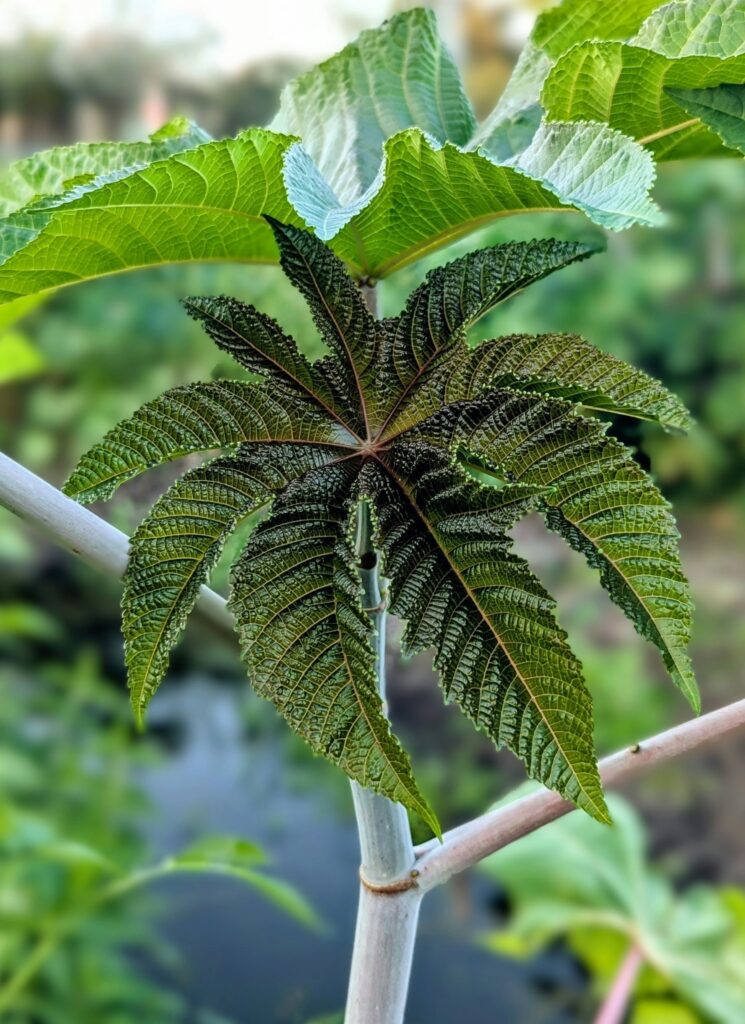
- Leaves: Alternate, broad, palmately lobed, green to reddish with reticulate venation
- Inflorescence: Terminal
- Flowers: Monoecious
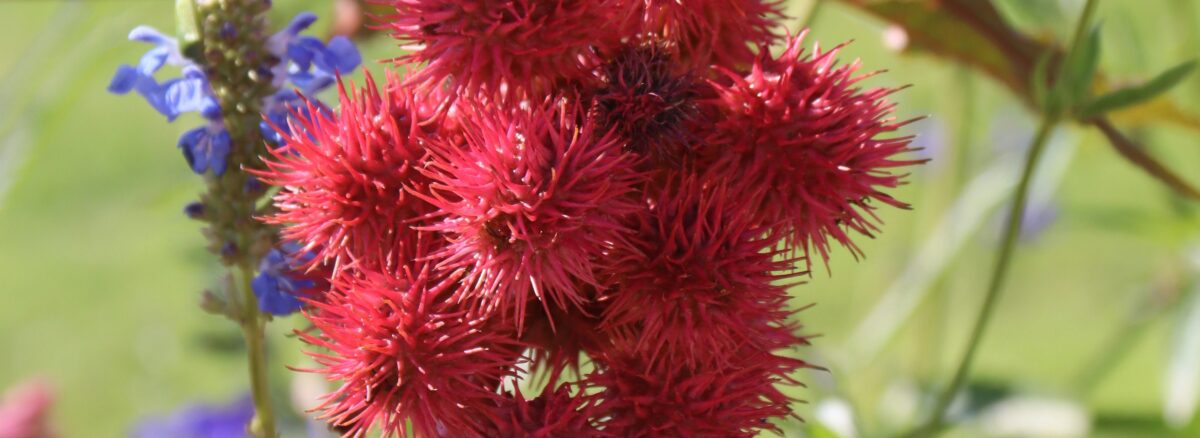
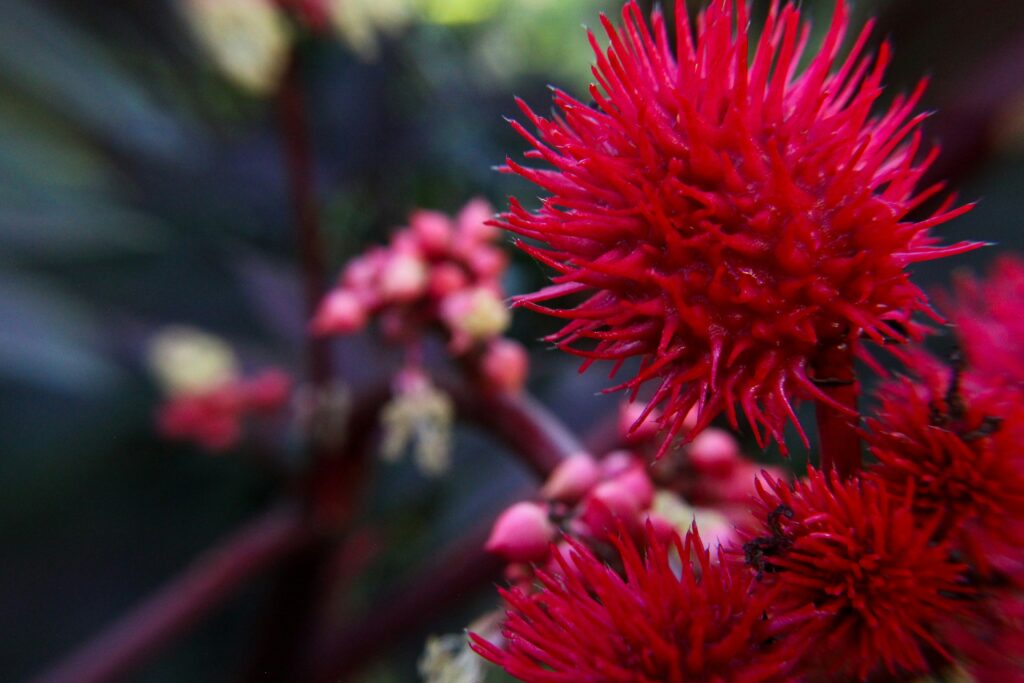
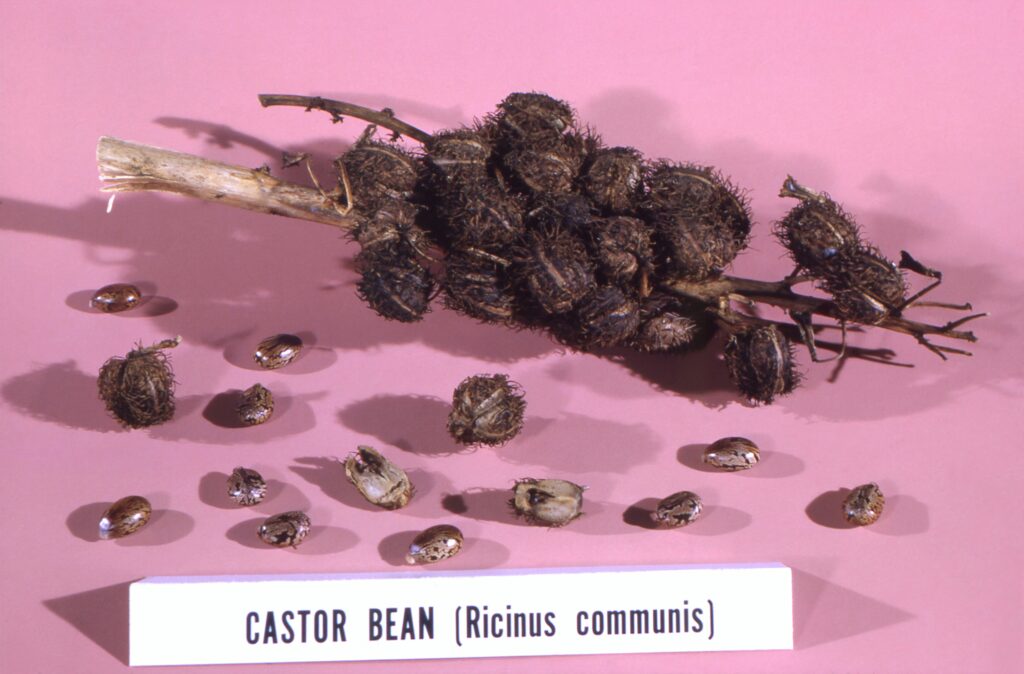
- Fruits: Globose, spiny capsule that splits open explosively; typically three-seeded
- Seeds: Carunculate with oily endosperm
Distribution
Eranda is native to the southeastern Mediterranean region, Eastern Africa, and India. It thrives in tropical climates and is widely cultivated across India in gardens and agricultural fields. The plant also grows wild in wastelands, particularly in hotter regions. It is commonly regarded as originally native to tropical Africa.
Major Chemical Constituents
Seeds and Leaves
- Ricinine (a toxic alkaloid)
- 1-methyl-3-cyano-4-methoxy-2-pyridone
Seed Coat
- Lupeol
- Lipids
- Phosphatides
Castor Oil
- Ricinoleic acid
- Arachidic acid
- Palmitic acid
- Stearic acid
- Hydroxy stearic acid
- Oleic acid
- Chlorogenic acid
- Hexadecanoic acid
- Hydrocyanic acid
- Uric acid
- Squalene
- Tocopherols
The plant contains fixed oil, ricin, ricinine, glycerides, and ricinoleic acid, which are responsible for its strong purgative properties.
(Reference: Illustrated Dravyaguna Vijnana, Vol. II – Dr. J. L. N. Shastry)
Sanskrit Synonyms and Their Significance
Eranda is described by many classical names, each reflecting a morphological or therapeutic characteristic:
- Gandharva Hasta / Yaksha Hasta / Panchangula – Leaves resemble an open hand with five projections.
- Deerghadanda – Long petiole or stalk.
- Eranda – Relieves stiffness and promotes movement by pacifying Vata.
- Vardhamana – Rapid growth habit.
- Vyaghrapucha – Inflorescence resembles a tiger’s tail.
- Rubaka / Urubaka – Balances aggravated Vata.
- Vyadambara – Acts as a purgative and cleanses bowels (Mala Shodhaka).
- Hasthikarni – Large leaves.
- Chitrabija – Seeds display varied colors and patterns.
- Vathari – Destroyer of Vata disorders.
- Uttanapatraka – Erect leaves and petioles.
- Chanchu – Female flowers possess beak-like projections.
- Aamanda – Beautiful appearance.
These synonyms highlight both structural features and pharmacological actions.
Systemic Classification
- Kingdom – Plantae
- Subkingdom – Phanerogamae
- Division – Angiospermae
- Class – Dicotyledonae
- Subclass – Archichlamydae
- Family – Euphorbiaceae
- Genus – Ricinus
- Species – communis
Varieties
Classical Ayurvedic texts such as Dhanvantari Nighantu, Sodhala Nighantu, Kaiyadeva Nighantu, Bhava Prakasha Nighantu, and Raja Nighantu describe two principal varieties:
- Shweta Eranda – White variety
- Rakta Eranda – Red variety
Raja Narahari additionally mentions Sthula Eranda. Both white and red types are identified botanically as Ricinus communis.
Classical Categorization
According to Charaka
- Bhedaniya – Group of purgative drugs
- Angamarda Prashamana – Relieves body pain
- Swedopaga – Useful in sweating therapies
According to Sushruta
- Vidradhi – Indicated in abscess conditions
- Adhobhagahara – Useful in Virechana (purgation therapy)
- Vata Samshamana – Pacifies Vata
According to Vagbhata
- Included in the Vidarigandhadi group.
Toxic Action and Management
Toxicity of Ricin
The root bark of Eranda is traditionally used as a strong external purgative. Castor oil acts as a mild laxative and cathartic. However, the seeds are highly toxic, and ingestion in large amounts may be fatal.
Castor seeds contain toxic constituents ranging from 2.8–3% in the whole seed, while the flour may contain up to 10%, making it extremely poisonous.
The chief toxic principles include albumin and ricin. Symptoms of poisoning usually appear after a latent period of several hours. Clinical manifestations include vomiting, abdominal colic, hemorrhagic gastroenteritis, stupor, convulsions, edema, and circulatory collapse.
Treatment of Ricin Poisoning
Management involves:
- Gastric lavage
- Administration of saline cathartics
- Maintenance of fluid and electrolyte balance
- Supportive and symptomatic care
Ricin exposure may also cause severe ocular inflammation. Interestingly, in very small doses, ricin exhibits antigenic properties and can stimulate the formation of antitoxic substances within the body, similar to immune responses against bacterial toxins.
Purification (Shodhana)
Eranda Shodhana Procedure
For purification, Eranda seeds are subjected to fomentation in coconut water for approximately three hours. Afterward, they are thoroughly washed with water and dried under sunlight. This process is traditionally believed to reduce toxicity.
Use in Panchakarma
Application of Leaves in Therapy
Castor leaves are utilized in a sudation therapy known as Prastara Swedana. In this method, heated herbal materials are spread over a stone slab, covered with castor leaves, and the patient is made to lie over them for a short duration to induce sweating.
Sthanika Karma (Systemic Actions)
External Applications
Eranda taila (castor oil) and leaf fomentation are useful in backache, sciatica, arthritis, joint inflammation, edema, skin disorders, breast swelling, throat inflammation, and for strengthening the nervous system.
Nervous System
Acts as Vata-pacifying (Vatahara). Beneficial in hemiplegia, Amavata, sciatica, Kampavata (Parkinson’s disease), headache, and generalized body heaviness (Angamarda).
Digestive System
Performs Amasodhana (removal of metabolic toxins). Due to its heating quality, it works as a carminative, clears obstructed channels, exhibits antimicrobial action, and promotes smooth physiological functioning. Indicated in abdominal cramps, constipation, hemorrhoids, hernia, hepatic and splenic disorders, and phantom tumors.
Circulatory System
Supports cardiac health and reduces edema.
Respiratory System
Alleviates Kapha disorders; useful in cough and respiratory difficulties.
Satikarana
Considered aphrodisiac, rejuvenative, anti-poisonous, and strength-promoting. Leaf bud decoction is used in snakebite poisoning to induce emesis and purgation for toxin removal. Also applied externally in certain poisonings such as aconite and opium.
Excretory System
Promotes urination and is useful in painful micturition and lower abdominal pain.
Reproductive System
Enhances lactation, purifies semen and uterus, and is indicated in gynecological disorders, hernia, and male reproductive problems.
Skin
Used in various dermatological conditions.
Tapakrama
Indicated in fever, as it promotes sweating.
Remedies Using Eranda
🔹 For Jaundice
Fresh tender castor leaves that appear coppery-red are collected and ground into a fine paste. Traditionally, a small quantity is administered early in the morning on an empty stomach under professional guidance. This practice is believed to help reduce aggravated bile associated with jaundice.
🔹 For Swelling and Pain
Mature castor leaves are made into a paste, mixed with a pinch of salt, and gently warmed. When applied over localized muscular swelling, it helps reduce inflammation and discomfort.
🔹 For Backache, Sciatica and Constipation
A decoction prepared from 20–25 g of dried castor root is commonly used. About 40 ml is taken twice daily, or medicated milk may be used as an alternative. In Ayurvedic practice, this supports relief from back pain, sciatica, and associated constipation.
🔹 For Gouty Arthritis
A whole castor leaf smeared with sesame oil and mildly heated is applied over affected joints. Regular application for about a week is traditionally used to reduce joint pain and swelling in gouty arthritis.
🔹 For Worm Infestation
Fine powder of Palasha (Butea monosperma) seeds is taken in a small pinch along with castor oil on an empty stomach. This classical remedy is described for relief from pinworms within a few days when used appropriately.
⚖️ How to Use Safely
Internal use of castor root and seeds should always be guided by a qualified practitioner. Self-medication is discouraged due to the plant’s potent purgative and toxic potential. External applications of leaf or root paste are comparatively safer when done appropriately.
🧴 Role in Therapeutic Purgation
Classical texts describe the use of milk processed with Trivrit (Operculina turpethum) and castor seeds in the management of ascites associated with Pitta imbalance (Charaka Samhita, Chikitsa Sthana, Chapter 13).
🌟 Benefits of Castor Root
Among Vata-pacifying and aphrodisiac herbs, castor root is considered highly effective. Traditional actions attributed to it include:
- Relieves abdominal distension and reverse peristalsis (Udavartahara)
- Supports spleen health (Pleehaghna)
- Helpful in abdominal masses (Gulmahara)
- Reduces bladder pain (Bastishoolahara)
- Useful in hernia (Antravruddhihara)
- Supports blood disorders (Shonitavikara)
- Helps in emaciation and dehydration (Shoshahara)
- Relieves colicky pain (Shoolaghna)
- Cleanses gastrointestinal tract (Margashodhana)
- Beneficial in asthma (Shwasahara)
- Useful in cough (Kasahara)
- Reduces abdominal fullness (Anahahara)
- Helpful in low back pain (Katiruja hara)
- Relieves headache (Shiroruja hara)
- Supports urinary disorders and diabetes (Mehahara)
- Useful in rheumatoid arthritis (Amavatahara)
- Anti-inflammatory (Shothahara)
🍃 Castor Fruit Properties
Eranda fruit is described as:
- Sweet in taste
- Slightly alkaline
- Light to digest
- Hot in potency
- Purgative in action
- Helpful in balancing Vata dosha
🍀 Castor Leaf Benefits
Castor leaves are traditionally known for:
- Vata-pacifying action
- Kapha-reducing effect
- Antimicrobial activity
- Support in urinary tract infections
- Mild Pitta-increasing tendency
- Use in abdominal masses
- Relief in bladder pain
- Use in hernia
- Relief in dysuria and urinary retention
🩹 External Applications
- Leaves dipped in sesame oil and heated are applied over injuries, arthritis, and painful joints.
- Paste of leaf or root with sesame oil is used externally in migraine, low back pain, sciatica, arthritis, mastitis, and painful skin conditions.
- Leaf poultice is traditionally applied over boils and sores.
🛢️ Castor Seed Oil Benefits
Castor seeds and oil are described in Ayurveda as:
- Acrid and thermogenic
- Digestive stimulant
- Strong cathartic
- Mild aphrodisiac
- Helpful in dyspepsia
The oil is slightly bitter-sweet, antipyretic, warming in nature, and viscous.
Traditional note:
White variety is often preferred in fever, while red variety is used in swelling, pallor, and certain mental disorders.
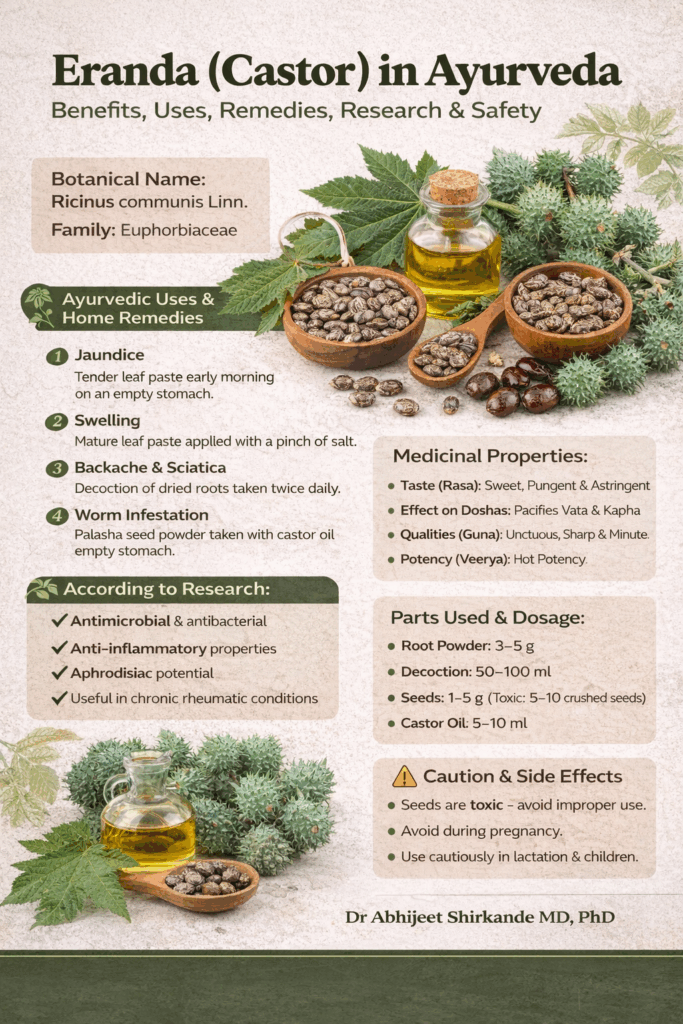
🔬 Research Insights on Ricinus communis
Modern experimental and pharmacological studies have reported:
- Antimicrobial activity
- Anti-inflammatory potential
- Antibacterial effects
Research observations include:
- Roots show aphrodisiac potential
- Tender leaves exhibit cholagogue activity
- Alcoholic extract of root bark demonstrated significant anti-inflammatory action in experimental models comparable to aspirin and corticosteroids
- Petroleum ether extracts showed inhibitory effects in chronic rheumatic conditions
⚠️ Side Effects and Precautions
- Castor seeds are toxic and must not be used improperly
- Avoid during pregnancy
- Use cautiously in lactating women and children under medical supervision
- Avoid in diarrhea and dysentery due to strong purgative action
🔄 Drug Interactions
With homeopathic medicines:
No significant interaction reported.
With nutritional supplements:
Generally compatible, but medical advice is recommended when multiple products are used.
With allopathic medicines:
Some Ayurvedic herbs may interact with modern drugs. If both are prescribed, it is traditionally advised to take the allopathic medicine first and the Ayurvedic preparation after about 30 minutes.
💊 Ayurvedic Formulations Containing Eranda
Eranda is an ingredient in several classical formulations, including:
- Maharasnadi Kashayam
- Chaturmukha Rasa
- Eranda Pak
- Gandharvahastadi Kashayam
✅ Final Note
Eranda is a powerful Ayurvedic drug with wide therapeutic applications, especially in Vata disorders, pain conditions, and bowel regulation. However, due to the toxicity of its seeds and strong purgative nature, it should always be used judiciously and preferably under the supervision of a qualified Ayurvedic physician.
Dr Abhijeet Shirkande MD, PhD
Shirkande Ayurved Clinic
