
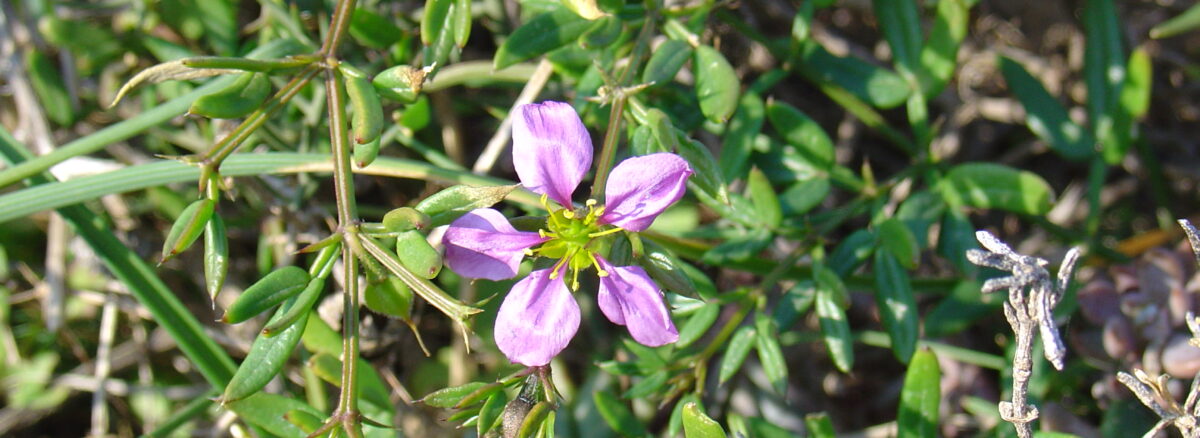
Complete Ayurvedic, Botanical & Research Review
Fagonia cretica Linn., traditionally known in Ayurveda as Dhanvayasa or Duralabha, is a small desert shrub belonging to the family Zygophyllaceae (Gokshura Kula).
It is described in Ayurvedic literature as a cooling, absorbent, and dosha-balancing herb used in conditions such as fever, burning sensation, cough, dyspnea, diarrhea, nausea, vomiting, mouth ulcers, urinary difficulty, and general debility.
The name Duralabha signifies “rare or difficult to obtain,” while Dhanvayasa refers to its growth in arid and desert landscapes.
🌍 Vernacular Names
The plant is known by various regional names across India:
- Hindi: Dhamasa, Dhamsa
- English: Khorasan thorn
- Bengali: Duralabha
- Gujarati: Dhamaso
- Marathi: Dhamasi
- Punjabi: Dhamah
- Tamil: Tulaganari
- Telugu: Gileragati
🪔 Sanskrit Synonyms
- Dhanvayasa – grows in desert
- Duralabha – difficult to obtain
- Samudranta – found near coastal regions
- Gandhari – associated with Gandhar region
- Kachura
- Ananta – spreads extensively
- Kashaya – astringent in taste
- Agraha – thorny and difficult to handle
- Marubhava – grows in dry places
- Tamramula – copper-colored roots
📚 Classical Categorization
According to Ayurvedic texts:
- Included under Kashahara Gana (cough-relieving group)
- Included under Hikka Nigrahana Gana (hiccup-relieving group)
- Classified in Guduchyadi and Mishra Vargas in Nighantu literature
🔎 Scientific Classification
- Kingdom – Plantae
- Order – Zygophyllales
- Family – Zygophyllaceae
- Genus – Fagonia
- Species – Fagonia cretica
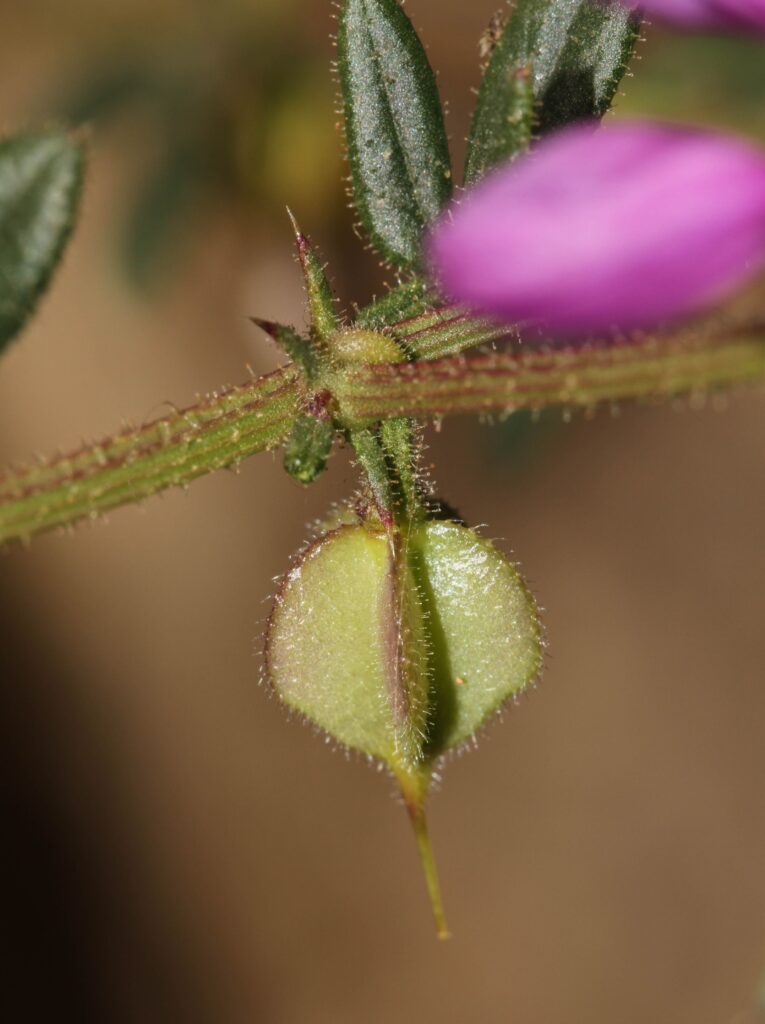
🌱 Botanical Description (Morphology)
Fagonia cretica is a thorny shrub adapted to dry climatic conditions, especially in Western India.
- Height ranges between 1 to 3 feet.
- Branches are thick with nodular joints.
- Leaves are small and reduced, divided into 3–4 leaflets.
- Thorns are strong and prominent.
- Flowers are pale red and typically appear before winter.
- Fruits possess a hairy texture with slightly curved and edged structure.
Its morphology clearly reflects adaptation to arid, desert environments.
🌿 Ayurvedic Pharmacological Properties (Dravya Guna)
Rasa (Taste)
- Madhura (Sweet)
- Kashaya (Astringent)
- Katu (Pungent)
Guna (Qualities)
- Laghu (Light to digest)
- Snigdha (Mildly unctuous)
Veerya (Potency)
- Sheeta (Cooling)
Vipaka (Post-digestive Effect)
- Madhura (Sweet metabolic effect)
Karma (Therapeutic Action)
- Pacifies aggravated Vata and Pitta
- Relieves burning sensation
- Acts as absorbent (Stambhana)
- Supports blood purification
🌿 Part Used & Dosage
Part used: Whole plant
Recommended dosage:
- Powder: 5–10 grams
- Decoction / Cold infusion: 40–50 ml
Administration should be individualized according to clinical assessment.
🧪 Chemical Composition
The aerial portions of the plant contain:
- Tri-terpenoid saponins
- Sapogenins
- Nahagenin
- Oleanolic acid
- Diterpenes
- Fagonone and its derivatives
- Flavonoids
The fruits are particularly rich in ascorbic acid (Vitamin C), contributing to antioxidant activity.
🌿 Traditional Therapeutic Applications
Fagonia cretica is used both internally and externally.
Internal Uses
- Cold infusion (around 50 ml) for nausea and diarrhea
- Powder (5 g) mixed with milk to improve strength in general debility
- Cold infusion (40–50 ml) in burning and painful urination
- Indicated in intermittent fever
- Useful in excessive thirst
- Beneficial in vomiting
- Supportive in diabetes and urinary disorders
- Helpful in gout and inflammatory joint conditions
External Uses
- Decoction used for bathing or sprinkling in eczema and febrile states
- Decoction wash for wounds and ulcers
- Gargling with decoction for mouth ulcers and gingivitis
- Fumigation using powdered plant in cough, nasal congestion, and breathing difficulty
- Powder applied in glandular swelling of the neck (Apachi)
📜 Indications According to Classical References
Traditionally described as:
- Sheetala (cooling)
- Dahahara (relieves burning sensation in gastritis, neuropathy, eye burning etc.)
- Useful in Vishamajwara (intermittent fever)
- Indicated in Trishna (excessive thirst)
- Beneficial in Chardi (vomiting)
- Indicated in Meha (diabetes and urinary disorders)
- Useful in Moha (delirium-like conditions)
- Medohara (reduces excess fat)
- Indicated in Visarpa (herpetic eruptions)
- Useful in Vatarakta (gout-like condition)
- Supportive in Jwara (fever)
⚠️ Safety & Drug Interactions
No adverse effects have been documented when used in appropriate dosage.
With Homeopathic Medicines
No known interaction.
With Nutritional Supplements
Generally safe with multivitamins and omega-3 fatty acids.
With Allopathic Medicines
Medical supervision is advised. If both systems are prescribed:
- Take allopathic medicine first.
- Wait approximately 30 minutes.
- Then take the Ayurvedic medicine.
💊 Ayurvedic Formulations Containing Duralabha
The herb is included in several classical and proprietary formulations such as:
- Dermoin tablet – for pigmentation disorders
- Diakof linctus – sugar-free cough preparation
- Sariva Kalpa – used in arthritis, urinary disorders, eczema, psoriasis, allergic skin conditions
- Ashoka Compound – used in menorrhagia, leucorrhoea, DUB, infertility
- Panchanimba Kashaya – digestive disorders and fever
- Punarnavasava – gastritis, edema, liver disorders
- Usheerasava – bleeding disorders, skin diseases, inflammation
- Pushkaramoolasava – COPD and bronchitis
🩺 Systemic Action (Sthanik Karma)
External Application
- Relieves burning sensation
- Promotes wound healing
- Reduces itching and local heat
- Cleans wounds
- Useful in glandular inflammation of neck
- Gargle beneficial in mouth ulcers
Internal Administration
Digestive System
Astringent nature provides absorbent action. Indicated in vomiting, diarrhea, and malabsorption.
Circulatory System
Acts as blood purifier and styptic. Beneficial in bleeding disorders and Vatarakta (rheumatic arthritis, gout).
Respiratory System
Reduces excess Kapha. Indicated in cough, rhinitis, dyspnea. Used for fumigation in asthma.
Excretory System
Useful in dysuria and urinary discomfort.
Satmikarana
Supports recovery from post-diarrheal weakness.
Twak (Skin)
Indicated in dermatological conditions.
Tapakarma
Used in fever and described as preventive support in eruptive conditions like chickenpox.
🔬 Research Insights
Experimental studies suggest:
- Hepatoprotective action against chemically induced liver damage
- Anticancer activity through reduction of cancer cell viability and induction of apoptosis
- Anti-hemorrhagic activity neutralizing venom-induced bleeding
- Anti-inflammatory and wound-healing potential demonstrated in animal models
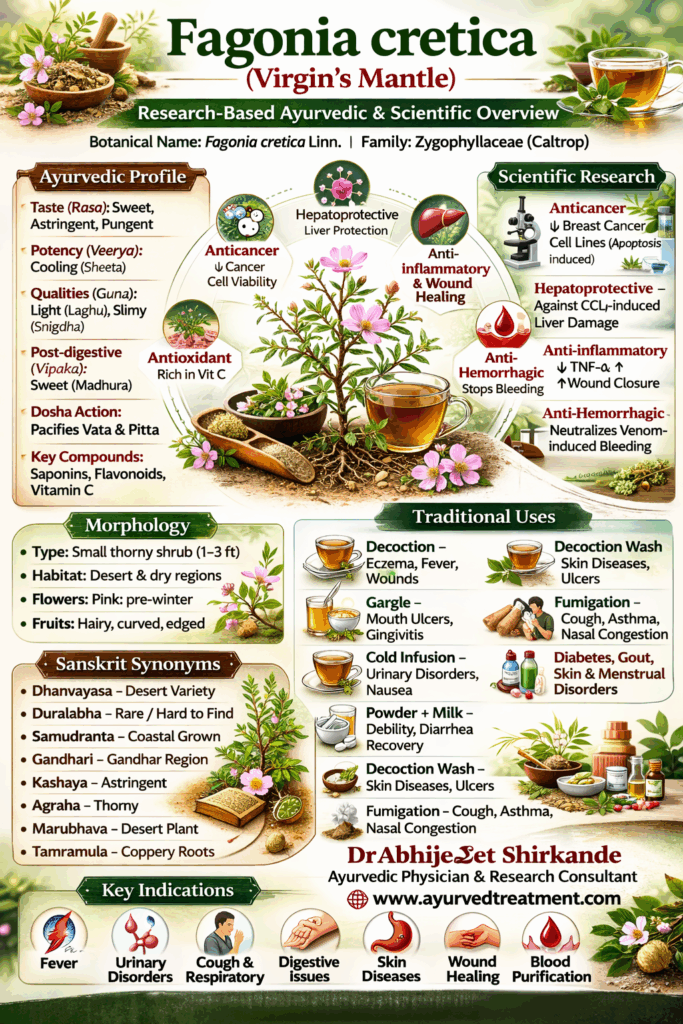
🌿 Conclusion
Fagonia cretica (Dhanvayasa / Duralabha) is a classical desert herb with multidimensional therapeutic applications. Its cooling potency, astringent character, and Vata-Pitta pacifying action make it valuable in inflammatory, febrile, respiratory, urinary, and dermatological conditions. Contemporary research findings further validate several traditional claims, highlighting its relevance in integrative medicine.
Dr Abhijeet Shirkande MD, PhD
Shirkande Ayurved Clinic
