
Introduction
Dhataki (Woodfordia fruticosa Kurz), a well-known medicinal shrub of Ayurveda, holds a unique place in classical pharmaceutics and therapeutics. It is widely recognized as the backbone herb of many Asava and Arishta preparations (self-generated alcoholic Ayurvedic formulations). Apart from its role as a natural fermenting agent (Sandhana dravya), Dhataki is valued for its astringent, antimicrobial, and wound-healing properties.
Traditional Ayurvedic texts describe its usefulness in disorders such as Atisara (diarrhea), Pittasra (bleeding disorders), Trushna (excessive thirst), and skin diseases. Modern phytochemical and pharmacological studies increasingly support many of these classical claims.
Botanical Profile
Botanical name: Woodfordia fruticosa Kurz / Woodfordia floribunda
Family: Lythraceae (Madayantika kula)
English name: Fire Flame Bush
Vernacular Names
- Hindi: Dhaaya / Dhaay ke Phool
- Telugu: Are Puvvu, Sireenji
- Tamil: Dhatari Jargi
- Gujarati: Dhaavadi
- Bengali: Dhai
- Marathi: Dhalas
- Punjabi: Dhavi
- Farsi: Dhaava
Sanskrit Synonyms
Classical literature describes Dhataki with multiple synonyms reflecting its morphology and actions:
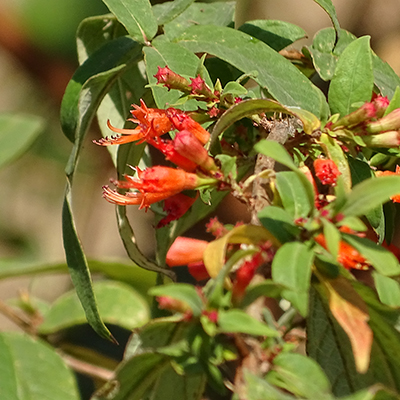
- Dhatupushpi, Vahnipushpi – bearing blood-red flowers
- Vahnijwala – flame-colored flowers
- Guchapushpa – flowers in clusters
- Sidhupushpi – used in alcoholic preparations
- Tamrapushpi – coppery red flowers
- Madakara – initiates fermentation
- Madayasini – useful in alcoholic formulations
- Dadimipatra – leaves resemble pomegranate
- Subhiksha – yields abundant flowers
- Parvatiya – grows in hilly regions
Classical Categorization
Charaka Samhita
- Pureesha Sangrahaneeya – increases fecal bulk
- Mutra Virajaneeya – restores normal urine color
- Sandhaneeya – promotes wound and fracture healing
Sushruta and Vagbhata
Included under Priyangvadi and Ambashtadi gana.
Distribution
Dhataki is a bushy shrub distributed widely throughout India, particularly in dry deciduous forests and hilly regions, up to about 2000 meters above sea level.
Morphology
- Branches: Long and spreading
- Bark: Smooth, ashy brown
- Leaves: 5–9 cm long, opposite or sub-opposite, sometimes in whorls of three, sessile
- Flowers: Bright red, glandular, pubescent pedicel; sepals with glandular dots
- Fruits: Capsule, irregularly dehiscent
Ayurvedic Pharmacodynamics
- Rasa (Taste): Kashaya (Astringent)
- Guna (Qualities): Laghu (light), Ruksha (dry)
- Veerya (Potency): Sheeta (cold)
- Vipaka: Katu (pungent)
- Dosha effect: Kapha-Pitta shamaka
- Prabhava: Madakari (in higher doses may cause delirium)
Karma (Actions)
Trishnahara, Stambhaka, Vishaghna, Krimighna, Visarpahara
Therapeutic Indications
Based on classical texts and clinical practice, Dhataki is useful in:
- Trushna – excessive thirst
- Atisara – diarrhea and dysentery
- Pittasra – bleeding disorders (menorrhagia, epistaxis, rectal bleeding)
- Visha – toxic conditions
- Krimi – worm infestation and infections
- Visarpa – spreading skin diseases including herpes
Chemical Constituents
Phytochemical studies have identified several bioactive compounds:
- Gallic acid
- Ellagic acid
- Beta-sitosterol
- Tannins
- Sugars
- Flavonoids (reported in modern analyses)
These constituents largely explain its astringent, antioxidant, and antimicrobial properties.
Part Used and Dosage
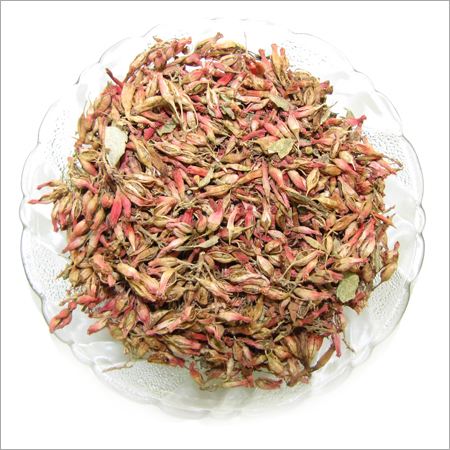
Part used: Flower
Dosage:
- Churna (powder): 1–3 g
Safety note: Excess dosage may produce delirium (Madakrit effect).
Interaction with Medicines and Supplements
- With Homeopathic medicines: No known interaction.
- With dietary supplements: Generally compatible, but medical advice is recommended when multiple products are used.
- With allopathic medicines: Physician supervision is advised. When co-administered, it is preferable to take modern medicine first and Ayurvedic medicine after about 30 minutes.
Research Review
Modern scientific investigations increasingly validate the traditional uses of Woodfordia fruticosa.
Antimicrobial activity
Experimental studies have shown that flower extracts possess inhibitory activity against several pathogenic bacteria and fungi. The high tannin and polyphenol content likely contributes to microbial cell wall disruption, supporting its traditional use in wound care and infections.
Antioxidant and anti-inflammatory effects
In vitro assays demonstrate significant free-radical scavenging activity. Phenolic compounds such as gallic acid and ellagic acid help reduce oxidative stress and inflammatory mediators. These findings correlate with its Ayurvedic indication in inflammatory and skin disorders.
Anti-diarrheal activity
Animal studies suggest that Dhataki reduces intestinal secretion and motility, probably due to its strong astringent tannins. This supports its classical indication in Atisara and Grahani-related conditions.
Role in fermentation (Sandhana)
Pharmaceutical research on Asava–Arishta preparation confirms that Dhataki flowers naturally harbor fermentative microorganisms and enzymes that facilitate alcohol generation. This validates its classical description as a Sandhana-preraka dravya.
Wound healing potential
Preclinical studies report faster wound contraction and improved epithelialization with topical application of flower extracts. The combined antimicrobial, antioxidant, and astringent actions appear responsible for this effect.
Research Gap and Future Scope
Despite promising pharmacological evidence, well-designed human clinical trials remain limited. Future research should focus on:
- Standardization of extracts
- Dose optimization
- Long-term safety evaluation
- Controlled clinical studies
- Mechanistic molecular studies
Such work will help integrate Dhataki more firmly into evidence-based Ayurvedic practice.
Ayurvedic Formulations Containing Dhataki
Dhataki is widely used in:
- Mustharishtam
- Sarivadyasava
- Chandanaadi Tailam
- Kutajashtaka Kashayam
- Many Asava and Arishta preparations
Its primary pharmaceutical role is as a natural fermentation initiator.
Sthanika Karma (Local and Systemic Actions)
External use
Flower paste or powder is applied to wounds and burns to reduce:
- Bleeding
- Burning sensation
- Microbial load
It exhibits antimicrobial, styptic, and wound-healing effects.
Internal actions
- Digestive system: Useful in diarrhea
- Circulatory system: Beneficial in bleeding disorders
- Excretory system: Indicated in Pittaja Prameha; normalizes urine color
- General health: Anti-toxic, useful in debility
- Reproductive system: Helps in leukorrhea and menorrhagia
- Skin: Indicated in erysipelas
- Fever: Useful in Paittika Jvara
Traditionally, leaves are used in the Konkan region for fever management.
