
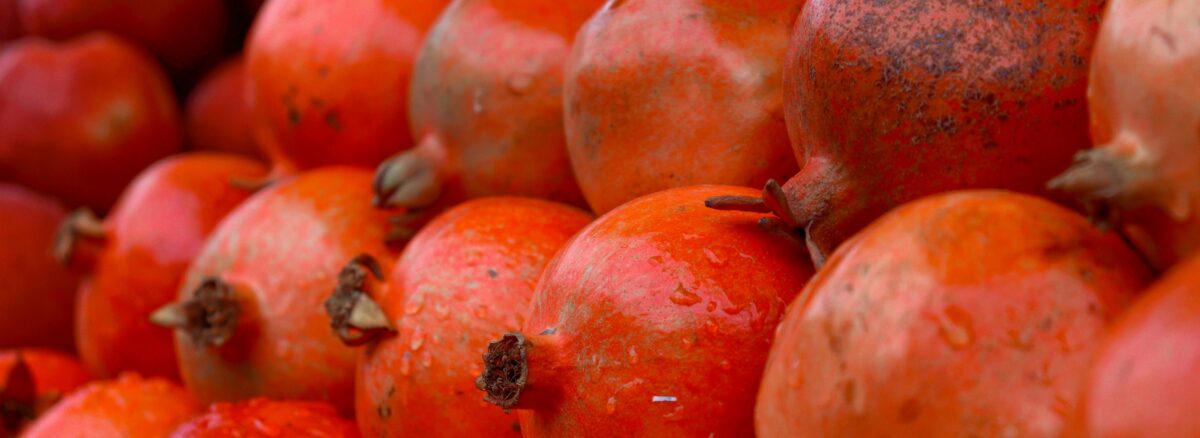
Pomegranate, botanically known as Punica granatum, is one of the most nutrition-rich and therapeutically valuable fruits described in Ayurveda and supported by modern science. Revered for thousands of years, not only the fruit but also its rind (Phala Twak), flowers (Pushpa), stem bark and root bark (Kandamula Twak) are used in various health conditions.
In India, pomegranate is commonly consumed fresh, juiced, or even mixed with curd rice in South India to enhance digestion.
🌿 Ayurvedic Properties of Pomegranate
Guna (Qualities)
- Laghu – Light to digest
- Snigdha – Unctuous / slightly oily
Rasa (Taste)
- Madhura – Sweet
- Amla – Sour
- Kashaya – Astringent
Vipaka (Post-digestive effect)
- Madhura (sweet) or Amla (sour)
Veerya (Potency)
- Anushna – Neither too hot nor too cold
🌸 Effect on Doshas (Tridosha Impact)
Sweet variety (Madhura Dadima)
- Balances Vata, Pitta, and Kapha
- One of the rare fruits with Tridosha balancing action (like Amla)
Sweet-sour variety
- Improves digestion
- Slightly increases Pitta
- Balances Vata and Kapha
Sour variety (Amla Dadima)
- Increases Pitta significantly
- Reduces Kapha and Vata
- Useful in Rheumatoid Arthritis
- Not advised in bleeding disorders
🌳 Morphology of Pomegranate Plant
- Habit: Large deciduous shrub or small tree
- Bark: Smooth, gray, thin with axillary or terminal thorns
- Leaves: Opposite, oblong-lanceolate, shining above, green beneath
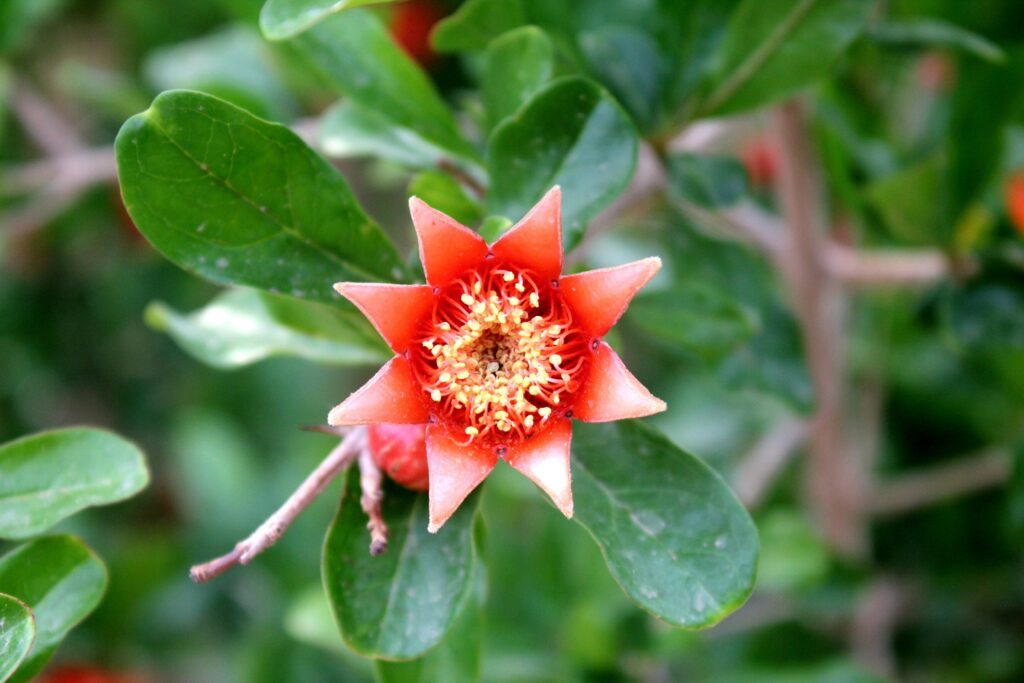
- Flowers: Solitary, red, numerous stamens, inferior ovary
- Fruit: Globose berry, reddish, odorless
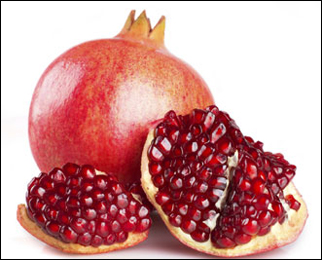
- Seeds: Triangular, pink juicy outer coat with honey-like inner core
🌎 Distribution
Pomegranate is native to Iran and is widely cultivated throughout India and other parts of the world.
📜 Classical Categorization in Nighantus
- Kaiyadeva Nighantu – Aushadhi Varga
- Raja Nighantu – Amradi Varga
- Dhanvantari Nighantu – Shatapushpadi section
- Madanapala Nighantu – Phaladi Varga
According to classical texts:
Kaiyadeva Nighantu classification:
- Ruksha Amla – Increases Pitta and Vata
- Snigdha Amla – Balances Kapha and Vata; not excessively heating
Bhavaprakasha Nighantu classification:
- Swadhu (Sweet)
- Swadhu-Amla (Sweet-sour)
- Kevala Amla (Pure sour)
🥤 Dosage (Matra)
- Phala Rasa (Juice): 20–50 ml
- Phala Twak Kwatha (Rind decoction): 40–80 ml
❤️ Pomegranate Fruit Benefits (Ayurvedic View)
1️⃣ Sweet Pomegranate
- Relieves excessive thirst (Trishna hara)
- Reduces burning sensation
- Cleanses oral cavity, throat, esophagus and stomach
- Improves sperm count and semen quality (Shukrala)
- Useful in fever
- Light and easy to digest
- Helps in diarrhea, IBS, ulcerative colitis
- Enhances intelligence, immunity and strength (Medhya Balakara)
- Good for heart (Hridya)
2️⃣ Sweet-Sour Pomegranate
- Improves digestive fire (Deepana)
- Relieves anorexia (Ruchya)
- Enhances taste perception
- Slightly increases Pitta
3️⃣ Sour Pomegranate
- Useful in Rheumatoid arthritis
- Balances Kapha and Vata
- Not suitable in bleeding disorders
- Increases Pitta
🔬 Modern Scientific Perspective
Modern research confirms that pomegranate is:
- Rich in antioxidants
- Cardio-protective
- Anti-inflammatory
- Anti-carcinogenic
- Antimicrobial
- Anti-hypertensive
- Anti-proliferative
Nutritional Components
- Vitamin C
- Vitamin B5
- Polyphenols
- Potassium
- Hydrolyzable tannins
- Ellagic acid
- Gallic acid
- Anthocyanins
- Flavonoids
- Sterols
- Lignans
- Terpenes
- Organic acids
Modern findings strongly support the classical Ayurvedic claim of “Hridya” (heart-protective property).
🌿 Pomegranate Peel (Phala Twak) Benefits
Pomegranate rind is especially useful in:
- Diarrhea
- Irritable bowel syndrome
- High Pitta conditions
- Burning sensation
- High blood pressure
- Stress
- High cholesterol
How to Prepare Peel Tea
1 tablespoon peel
- 1 cup water
Boil 3 minutes
Filter and drink lukewarm
External Uses
- Acne and oily skin
- Gargling for throat irritation
- Improves voice clarity
- Face pack with sandalwood for wrinkles and skin tightening
🧈 Pomegranate with Ghee – Gastric Healing Remedy
Pomegranate balances Pitta and helps in:
- Gastritis
- GERD
- Peptic ulcers
- IBS with diarrhea
- Ulcerative colitis
- Acid peptic disorders
Method:
½ cup fresh pomegranate
- 1–2 tsp ghee
Take 30 minutes before food, once or twice daily.
Ghee soothes mucosal lining and enhances healing.
💊 Pharmacological Activities
Punica granatum exhibits:
- Antioxidant activity
- Anti-inflammatory effects
- Anti-obesity action
- Anti-hyperlipidemic effect
- Anti-bacterial & anti-fungal properties
- Anti-hypertensive activity
- Anti-carcinogenic potential
Research shows pomegranate leaf extract reduces obesity and hyperlipidemia in high-fat diet-induced obese mice.
🏥 Systemic Actions (Sthanika Karma)
Nervous System
- Brain tonic
- Strengthens nervous tissue
Digestive System
- Carminative
- Absorbent
- Useful in anorexia, diarrhea, acid reflux
- Root bark effective in tapeworm infestation (followed by Virechana)
Circulatory System
- Cardio-protective
- Helpful in anemia and bleeding disorders
Respiratory System
- Useful in cough of Vata-Pitta origin
- Reduces dryness
- Pacifies Kapha
Excretory System
- Useful in dysuria
- Reduces excessive urination
- Improves reproductive strength
Skin (Twak)
- Reduces burning sensation
- Beneficial in skin disorders
Fever (Tapakrama)
- Reduces fever and associated weakness
🌿 Remedies
For Dysentery
Rind decoction 15–20 ml repeatedly.
Leaf decoction:
1 tablespoon dried leaf powder
Boil in 1 cup water 5–10 minutes
Add honey
30 ml twice daily before food (5–7 days)
For Bradycardia
Akarakarabha churna + Pushkaramoola churna + Shrunga bhasma + Vamsha lochana
Given with pomegranate juice before food (under medical supervision only).
⚠️ Side Effects
- May cause constipation in excess
- Useful in diarrhea but those with chronic constipation should use cautiously
💊 Interactions
- Generally safe with homeopathic medicines
- Usually compatible with supplements (consult if taking multiple products)
- When taken with allopathic medicines:
- Take allopathic medicine first
- Wait 30 minutes
- Then take Ayurvedic medicine
🌿 Ayurvedic Formulations Containing Pomegranate
- Dadima Chatushama Churna
- Dadimashtaka Churna
- Lavang Bhaskar Churna
- Mrutasanjeevani Sura
- Dadimadi Ghrita
- Yavani Churna
- Narayana Churna
🌏 Common Names
- Hindi – Anar
- Marathi – Dalimba
- Tamil – Mathalam
- Kannada – Dalimbe
- Telugu – Danimma Kaya
- Malayalam – Malattu
- Urdu – Anar
- Persian – Anar
- Arabic – Gulnar
📖 Sanskrit Synonyms
Phalalam, Kuchaphala, Shukapriya, Raktabija, Raktapushpa, Lohitapushpaka, Dantabeeja, Madhubeeja, Manikya, Valkala, Rasala, Pathyakari, Vrintaphala and many more — describing its red flowers, juicy seeds, globose fruit and health-promoting nature.
🧬 Botanical Classification
- Kingdom – Plantae
- Division – Magnoliophyta
- Class – Dicotyledon
- Order – Rosida
- Family – Rutaceae
- Genus – Citrus
- Species – Sinensis
🌟 Conclusion
Pomegranate is truly a Tridosha-balancing, heart-protective, digestive-enhancing and rejuvenating fruit described extensively in Ayurveda and validated by modern science.
Whether used as fruit, juice, peel decoction, or combined with ghee — it remains one of the safest and most versatile natural remedies for digestive, cardiac, metabolic and inflammatory disorders.
If used judiciously according to its type (sweet, sweet-sour, sour) and patient constitution, it becomes a powerful functional food and therapeutic agent.
