
By Dr. Abhijeet Shirkande | Contact: 9975253664
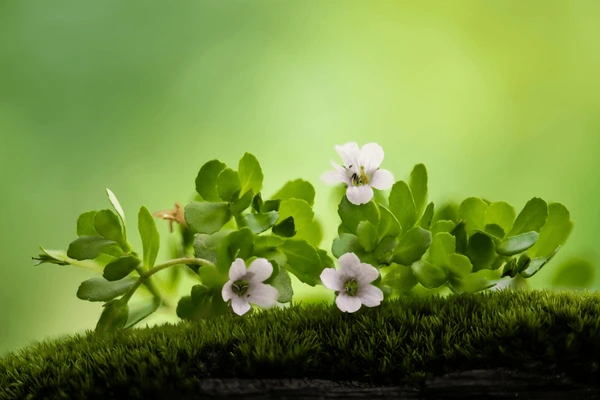
Brahmi, scientifically known as Bacopa monnieri (Linn) Pennell (also Gratiola monniera L.), is a treasured herb of Ayurveda, widely recognized for its cognitive-enhancing properties. Belonging to the Scrophulariaceae family, it is commonly referred to as Thyme-leaved gratiola, Water hyssop, or Indian Pennywort. Traditionally, Brahmi has been used to improve intelligence, memory, and mental clarity, and modern research confirms its diverse pharmacological effects.
1. Chemical Constituents
Brahmi contains several bioactive compounds, including:
- Saponins: Bacosides A & B, Bacogenins A1-A4
- Alkaloids: Brahmine, Herpestine
- Others: Monnierin, Hersaponin, B-Sitosterol, Ascorbic acid, Nicotinic acid, Alanine, hentri-aconitane, Octacosane
Reference: Illustrated Dravyaguna Vijnana, Vol. II, Dr JLN Shastry.
2. Traditional and Modern Uses
Brahmi is traditionally employed for:
- Enhancing intelligence, memory, and cognition
- Reducing anxiety, depression, and insomnia
- Supporting neurological health (tinnitus, neuropathy, ADHD)
- Cardiovascular support (hypertension and antioxidant effects)
- Anti-aging and general rejuvenation
Modern studies confirm:
- Improved attention, cognitive processing, and working memory (Khon Kaen University, Thailand)
- Antioxidant and DNA-protective effects (Defense Food Research Laboratory, Mysore, India)
- Evidence for cognitive enhancement in psychiatric conditions, OCD, and memory disorders (Swinburne University of Technology, Australia)
3. Medicinal Properties
| Parameter | Description |
|---|---|
| Rasa (Taste) | Tikta (bitter), Kashaya (astringent) |
| Guna (Quality) | Laghu (light to digest) |
| Vipaka (Post-digestive taste) | Madhura (sweet) |
| Veerya (Potency) | Sheeta (cold) |
| Dosha Effects | Balances Vata and Pitta |
| Prabhava (Special action) | Medhya (enhances intelligence) |
Ayurveda also highlights Brahmi’s benefits in inflammation (Shophahara), anemia (Panduhara), fever (Jvarahara), skin disorders (Kushtahara), and mental health (Unmada vinashini).
4. Part Used and Dosage
- Part Used: Whole plant
- Adult Dosage:
- Fresh juice: 10–20 ml/day
- Powder: 2–3 g/day (divided doses)
- Extract capsules: 250 mg – 500 mg, 1–2 times/day
- Children:
- 1–5 years: Brahmi ghrita (herbal ghee)
- 5–12 years: 250 mg powder/capsule per day
- 12–18 years: 250 mg extract capsule 1–2 times/day
Decoction Preparation: 1 tbsp powder + 2 cups water, boiled and reduced to half, consumed warm.
5. Brahmi with Milk and Other Liquids
- Milk: Cold milk suits Pitta types; hot milk suits Vata/Kapha types
- Ghee, Honey, or Water: Enhances absorption and therapeutic benefits
- Dosage: 1–2 capsules or 2 g powder with 1 tsp ghee or warm milk
6. Research Evidence
- Neuroprotective Effects: Prevents protein misfolding implicated in Alzheimer’s, Parkinson’s, and systemic amyloidosis (Gujarat Forensic Sciences University)
- Cognitive Function: Clinical trials show improvements in memory, concentration, and attention
- Antioxidant Effects: Rich in polyphenols, supports DNA and cellular health
7. Brahmi vs. Gotu Kola
- Both herbs enhance cognition
- Brahmi is superior for memory and intelligence
- Gotu kola does not significantly increase Pitta dosha
8. Action on Pitta Dosha
- Brahmi is cooling, balances Vata and Kapha
- Mildly stimulates Pitta after digestion (Katu vipaka)
- Less intense than spicy foods or stimulants
9. Safety and Side Effects
- Safe for children >1 year, pregnancy (short term), and lactation
- Avoid in bradycardia or sensitive stomachs
- Side effects: Dizziness or alertness-related sleep disturbances in some individuals
10. Interactions with Medicines
- Generally safe with homeopathic remedies and dietary supplements
- With allopathic drugs: Take western medicine first, wait 30 minutes, then take Brahmi
11. Diet Recommendations
- Favor: Ghee, coconut oil, almonds, flaxseed, walnuts, soy, vegetables like broccoli, carrots
- Avoid: Junk food, soda, processed foods
12. Ayurvedic Formulations
- Brahmi Vati, Brahmi Ghrita, Saraswata Churna: Memory, learning, concentration
- Balark Ras, Krimi Kuthar Ras: Children’s health, digestive support
- Saraswatarishta: General anti-aging tonic
Brands: Himalaya Brahmi, Patanjali Brahmi Churna (consult doctor for dosage)
13. Brahmi Juice for Infants
- Fresh leaf juice: 3 drops/day (after 9 months of age)
- Decoction: 1 tsp crushed leaves + 1 cup water, reduced to half, 10 drops/day
Always consult an Ayurvedic doctor before administration.
14. FAQs
- Consultation: Always advised before starting Brahmi
- Time to Show Effect: 1–2 weeks (varies with dose and combination therapy)
- Diabetes: Helps reduce blood sugar; monitor levels
- Non-veg diet: Permissible unless advised otherwise
15. Sanskrit Synonyms
- Brahmi: Named after Brahma, the creator
- Saraswata/Saraswati: Enhances learning and intelligence
- Aindri, Matsyakshi, Somavalli, Vayastha – Rejuvenating and cognitive benefits
16. Sthanika Karma (Systemic Actions)
- Nervous: Memory, anti-convulsive
- Circulatory: Blood purifier, heart stimulant
- Respiratory: Alleviates Kapha, treats cough
- Excretory: Diuretic, dysuria treatment
- Reproductive: Dysmenorrhea, fertility support
- Digestive: Indigestion, weak digestive strength
- Skin: Relieves itching, stimulates sweat glands
17. Classical Categorization
- Charaka Samhita:
- Prajasthapana – stabilizes pregnancy
- Balya – immunity and strength enhancement
18. Varieties, Distribution, Morphology
- Varieties: Ra. Ni., Ksudra Patra Brahmi
- Distribution: India (moist areas, riversides), Sri Lanka, Singapore
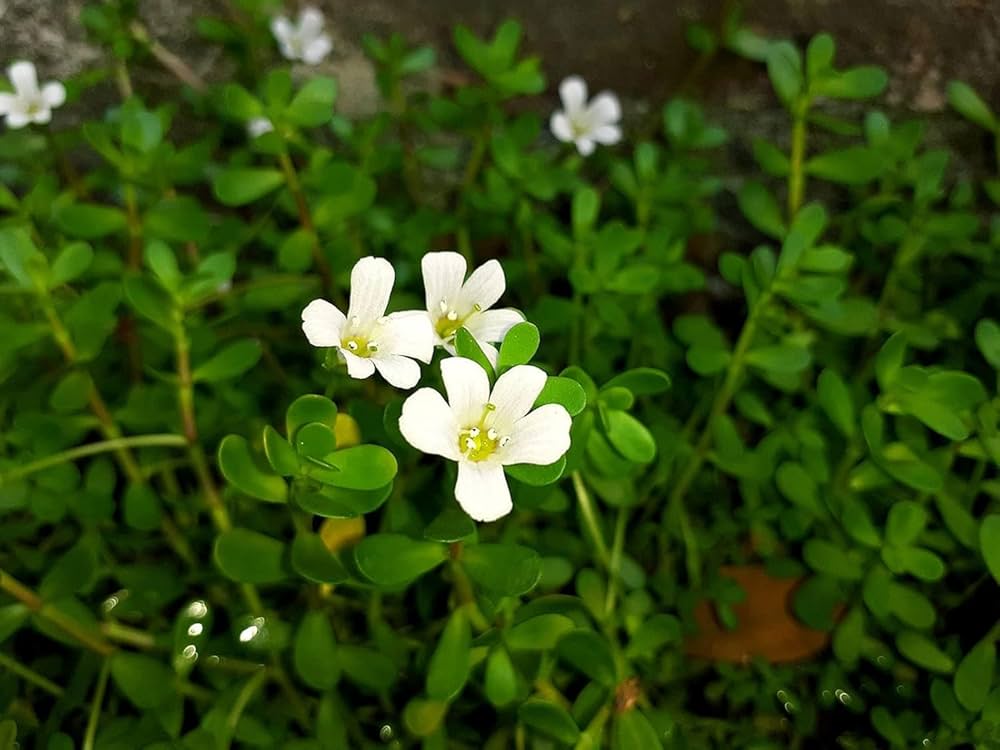
- Morphology: Succulent, creeping herb; white/pale blue flowers; ovoid capsules; oblong seeds
19. Combination with Ashwagandha and Shankhapushpi
- Uses: Memory, concentration, immunity, strength, anti-aging, psychiatric support
- Moderate Uses: Wound healing, cough, cold, asthma
- Minor Uses: Sleep, speech, epilepsy, digestive support
Administration: Polyherbal preparations like Shankhapushpi syrup, Brahmi Power Granules, Divya Medha Vati
20. Brahmi for Brain Power
- Sleep and Memory: Brahmi with ghee or warm milk, night dose
- Mental Alertness: Brahmi with honey or Saraswatarishta, morning dose
- Digestive Weakness: Brahmi with Trikatu or cumin paste
Note: Polyherbal combinations are preferred over Brahmi alone for targeted effects.
Conclusion:
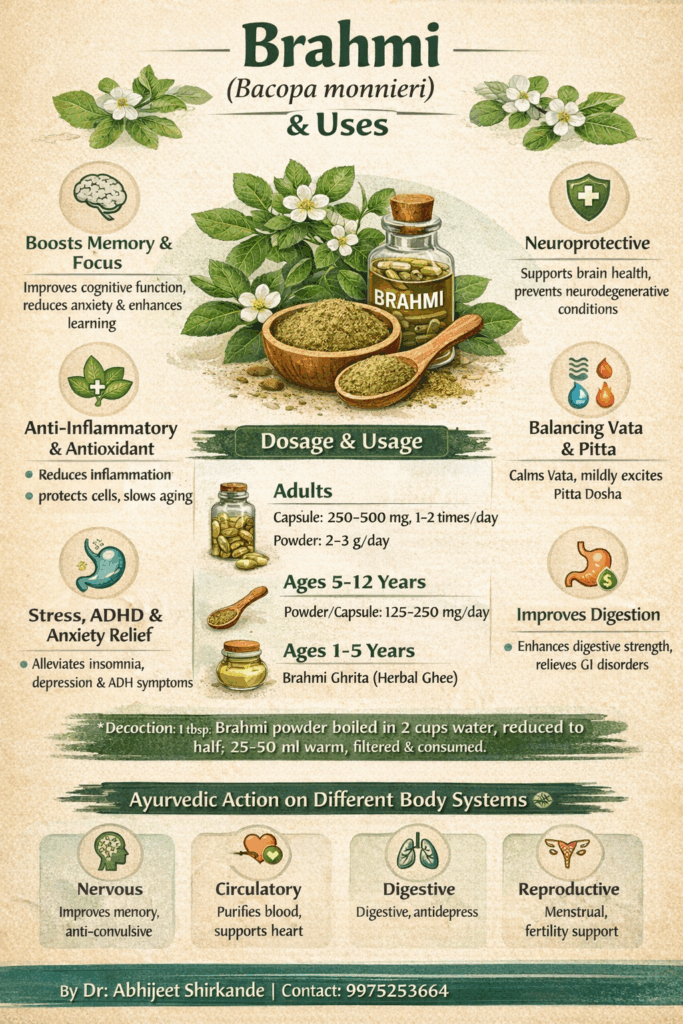
Brahmi (Bacopa monnieri) is a scientifically validated nootropic, antioxidant, anti-inflammatory, and anti-aging herb. Its versatility spans cognitive enhancement, neuroprotection, metabolic support, and systemic rejuvenation. With proper dosage and supervision, Brahmi can be safely integrated into Ayurvedic therapeutic programs for children and adults alike.
