
Introduction
Phyllanthus niruri, commonly known as Bhumyamalaki or Bhui Amla, is one of the most respected liver-protective herbs in Ayurveda. It is widely used in the management of jaundice, hepatitis, fatty liver, splenomegaly, diabetes, urinary disorders, skin diseases, and inflammatory conditions.
It is also an ingredient in classical Rasayana formulations such as Chyawanprash.
Latin Name: Phyllanthus niruri Linn., Phyllanthus amarus
Family: Euphorbiaceae (Eranda Kula)
Sanskrit Synonyms
Bhoomi Amalaki, Bhu Dhatri, Shatamala, Bahupatra, Bahuphala, Tali, Tamalaki, Trutoshiva, Sookshmapatri, Shubhankini, Shiva, Bahuveerya, Vishvakparni and others.
Sanskrit Verse
Bhumyamalaki is indicated in:
- Rochani – Enhances appetite
- Pandu – Anemia
- Raktapitta – Bleeding disorders
- Kaphaja Kushta – Skin diseases
- Visha – Toxic conditions
- Shwasa & Kasa – Respiratory disorders
- Trushna & Pipasa – Excess thirst
- Daha – Burning sensation
- Hidhma – Hiccups
- Pitta Meha – Diabetes
- Mutraroga – Urinary disorders
Botanical Classification
- Kingdom: Plantae
- Order: Malpighiales
- Family: Phyllanthaceae
- Genus: Phyllanthus
- Species: P. niruri
Properties, Part Used, Dosage
Ayurvedic Pharmacodynamics
- Rasa: Tikta (Bitter), Kashaya (Astringent), Madhura (Sweet)
- Guna: Laghu (Light), Ruksha (Dry)
- Veerya: Sheeta (Cooling)
- Vipaka: Madhura
- Karma: Kaphapitta Shamana
Chemical Constituents
Major constituents include:
- Phyllanthin
- Niranthin
- Flavonoids
- Alkaloids
- Geraniin
- Corilagin
- Ellagitannins
- Kaempferol derivatives
- Sterols
Classical Categorization
- Charaka – Kasahara, Shwasahara
- Dhanvantari Nighantu – Chandanadi Varga
- Bhavaprakasha – Guduchyadi Varga
- Raja Nighantu – Parpatadi Varga
- Kaiyyadeva Nighantu – Oushadhi Varga
Vernacular Names
Hindi – Bhui Amla
English – Stonebreaker
Kannada – Nelanelli
Malayalam – Kizharnelli
Tamil – Kilanelli
Telugu – Nela Usirika
Marathi – Bhui Amla
Spanish – Chanca Piedra
Brazil – Quebrapedra
Sinhala – Pittawaka
Sind – Niruri
and various regional names across India and abroad.
Morphology
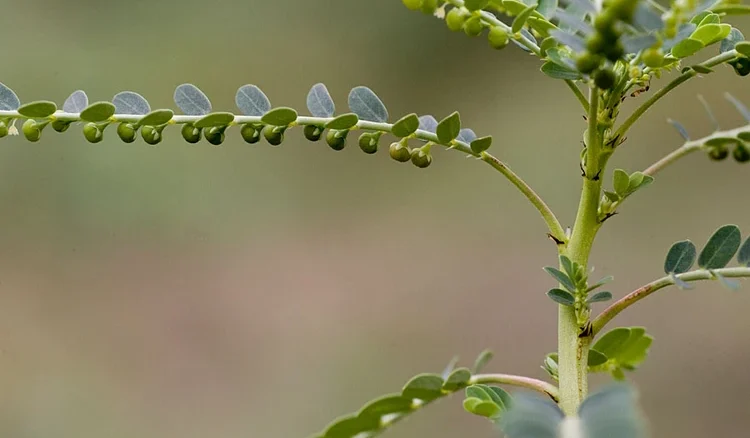
Bhumyamalaki is a small annual herb growing up to 2 feet tall.
- Leaves: Small, alternate, arranged in two rows
- Flowers: Small, pale green, monoecious
- Stem: Smooth, light green
- Fruits: Tiny smooth capsules
- Habitat: Widely distributed across India, especially coastal regions
Uses, Indications
Bhumyamalaki is used both internally and externally in Ayurvedic clinical practice.
External Uses
- Leaf paste applied for skin infections and inflammatory skin disorders
- Whole plant paste with rock salt applied over fractures to reduce swelling and pain
- Root paste triturated with lime juice or rice gruel used in conjunctivitis and blepharitis
- Paste with buttermilk used in jaundice
- Processed paste applied over eyelids in eye pain
Internal Uses
- Fresh leaf juice (15–20 ml empty stomach) in indigestion, hyperacidity, and jaundice
- Whole plant juice (15 ml) in fever, hepatomegaly, splenomegaly
- Decoction (30 ml) as blood purifier and for skin diseases
- Herbal tea in typhoid
- Juice in cough and asthma (internal or nasal use under supervision)
Disease-Specific Indications
- Prameha (Diabetes): Powder with Maricha
- Raktapitta (Haemorrhage): Seeds with rice water
- Pradara: Root with rice water
- Oedema: Leaf and root paste
- Chronic Dysentery: Infusion of tender shoots
- Typhoid: Leaf decoction
Part Used
Whole plant (Panchanga)
Dosage
- Fresh juice: 10–20 ml
- Powder: 3–6 grams daily
- Decoction: 30 ml
Dosage should be individualized under Ayurvedic supervision.
Pharmacology
Modern research identifies the following actions:
- Hepatoprotective
- Antioxidant
- Anti-viral
- Anti-inflammatory
- Hypoglycemic
- Antispasmodic
- Analgesic
- Carminative
- Febrifugal
- Mild laxative
- Biliary stimulant
- Vermifugal
Useful In:
Hepatitis, jaundice, diabetes, kidney stones, menorrhagia, dyspepsia, cystitis, prostatitis, hypertension, skin ulcers, sore throat, chronic dysentery.
Adverse Effect
- No significant adverse effects in recommended dosage
- Excess use may aggravate Vata due to cooling nature
- Mild laxative effect — caution in diarrhea
Interaction with Medicines, Supplements
With Homeopathic Medicines
Generally compatible.
With Supplements
Usually safe with multivitamins and omega-3, but medical supervision is advised.
With Allopathic Medicines
Maintain a 30-minute gap between conventional and Ayurvedic medicines. Consult physician if on diabetes or liver medication.
Bhoomyamalaki for Liver Protection
Bhumyamalaki is one of Ayurveda’s most trusted natural liver protectors.
It helps in:
- Fatty liver
- Elevated liver enzymes
- Hepatitis
- Alcoholic liver damage
- Drug-induced hepatotoxicity
Actions include:
- Liver cell regeneration
- Reduction of oxidative stress
- Improved bile flow
- Anti-inflammatory protection
Ayurvedic Medicines
Formulations containing Bhumyamalaki include:
- Clearliv Syrup
- A3 Forte Capsule
- Avir Tablet
- Livplus Capsule
- Vasuliv Tablet
- Beliv Tablet
- Chyavanaprasha
- Kantakari Ghrita
- Bhumyamalakadi Kashaya
Research
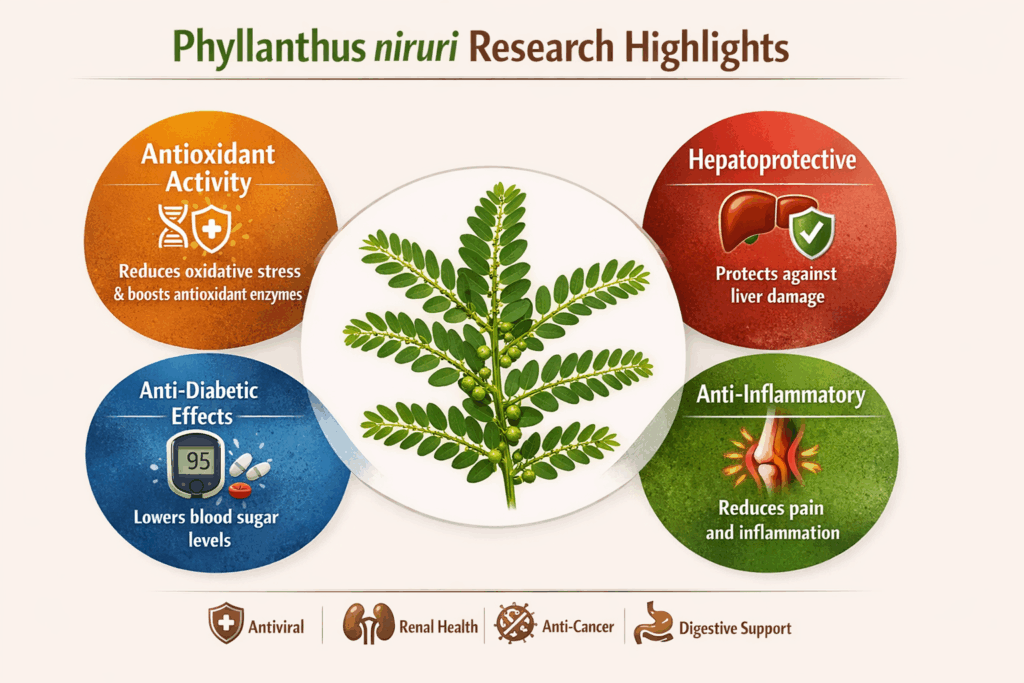
Antioxidant Activity
Studies demonstrate reduced lipid peroxidation and improved antioxidant enzyme levels (GSH, CAT, SOD).
Hepatoprotective Study
Animal studies show protection against acetaminophen-induced liver toxicity.
Anti-diabetic Study
Methanolic extracts show significant blood glucose reduction in STZ-induced diabetic models.
Anti-inflammatory Study
Standardized extracts demonstrate significant anti-inflammatory and analgesic activity.
These compounds contribute to hepatoprotective and metabolic effects.
Sthanika Karma (Systemic Action)
External Use
- Skin disorders
- Wound inflammation
- Fracture swelling
- Eye disorders (with Saindhava and fermented gruel)
Internal Administration
Digestive System
Carminative, digestive stimulant, liver stimulant. Useful in anorexia, thirst, gastric ulcer, jaundice.
Circulatory System
Blood purifier; beneficial in bleeding disorders.
Respiratory System
Useful in cough and dyspnea; root with sugar in hiccough.
Reproductive System
Indicated in female reproductive disorders.
Excretory System
Useful in diabetes and urinary disorders.
Satmikarana
Promotes strength and exhibits anti-toxic action.
Dr. Abhijeet Shirkande MD, PhD
Shirkande Ayurved Clinic
